Why does my shoulder hurt?
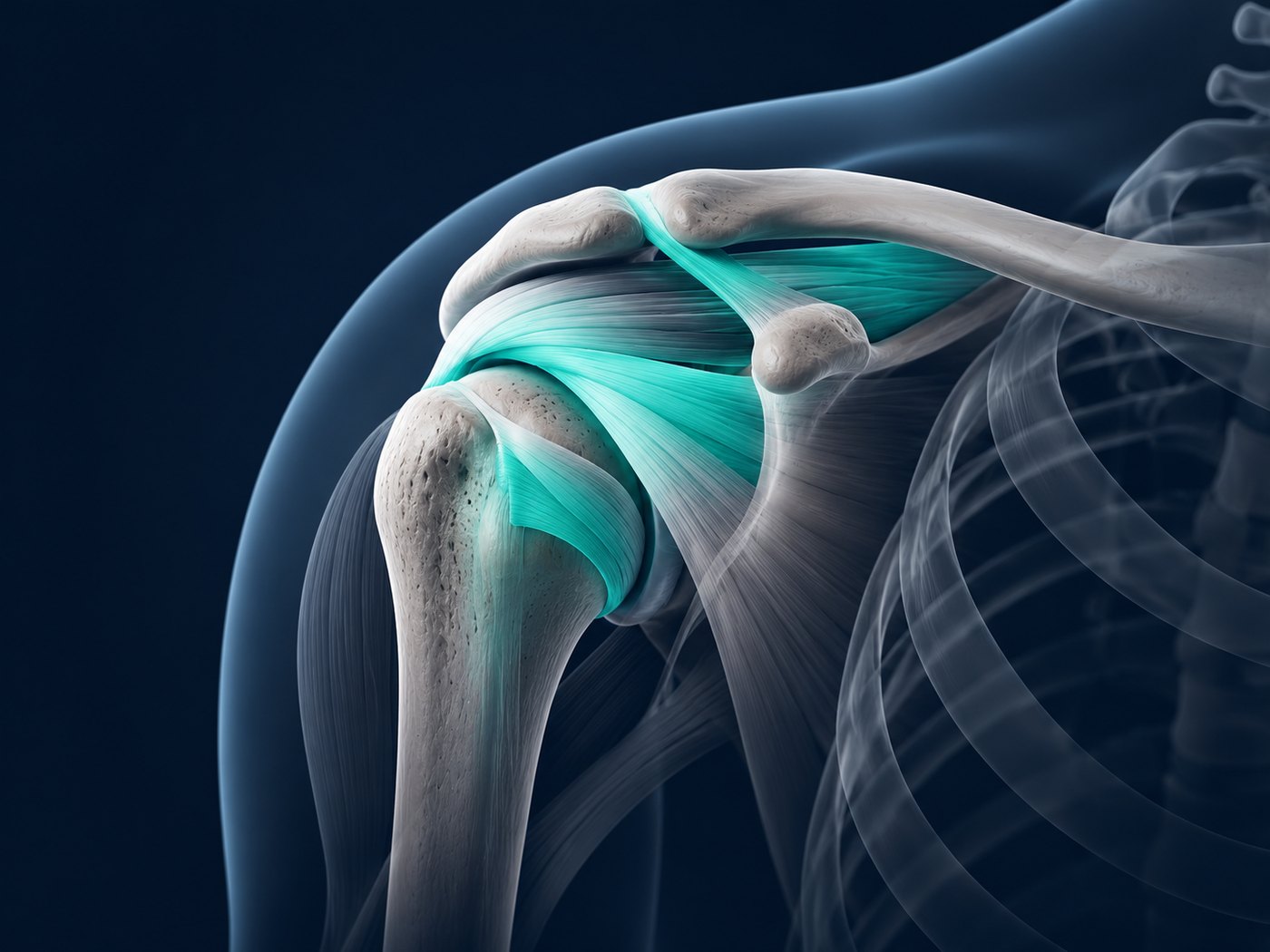
The shoulder is a ball-and-socket joint held together mostly by soft tissue: the rotator cuff — a group of tendons that lift and rotate the arm. Because it moves so much, it's prone to wear, impingement and tears, especially after 40 or with repetitive overhead activity.
These are the causes I see most often in consultation:
- Rotator cuff injury: pain when lifting the arm, weakness and pain at night — you can't sleep on that side.
- Dislocation and instability: the shoulder "pops out" or feels loose, often after a first dislocation.
- Frozen shoulder: progressive stiffness and pain that limits almost every movement.
- Collarbone fracture: after a fall or impact; some need surgery to heal in the right position.
Night pain that wakes you up and difficulty lifting your arm are classic signs of a rotator cuff problem. Treating it early often avoids a bigger, harder-to-repair tear.
Shoulder arthroscopy: repair through tiny incisions
Most shoulder problems that need surgery can be solved with arthroscopy. Through small incisions I introduce a camera and micro-instruments to repair the rotator cuff or stabilize the joint after dislocations — no need for open surgery.
Compared with traditional surgery, arthroscopy usually means:
- Small incisions and less damage to healthy tissue
- Less pain and lower risk of infection
- A more comfortable, guided rehabilitation
"Shoulder pain always goes away on its own with rest."
Some cases do improve with rehab, but a torn cuff won't heal by itself. The right assessment tells us which path is yours.