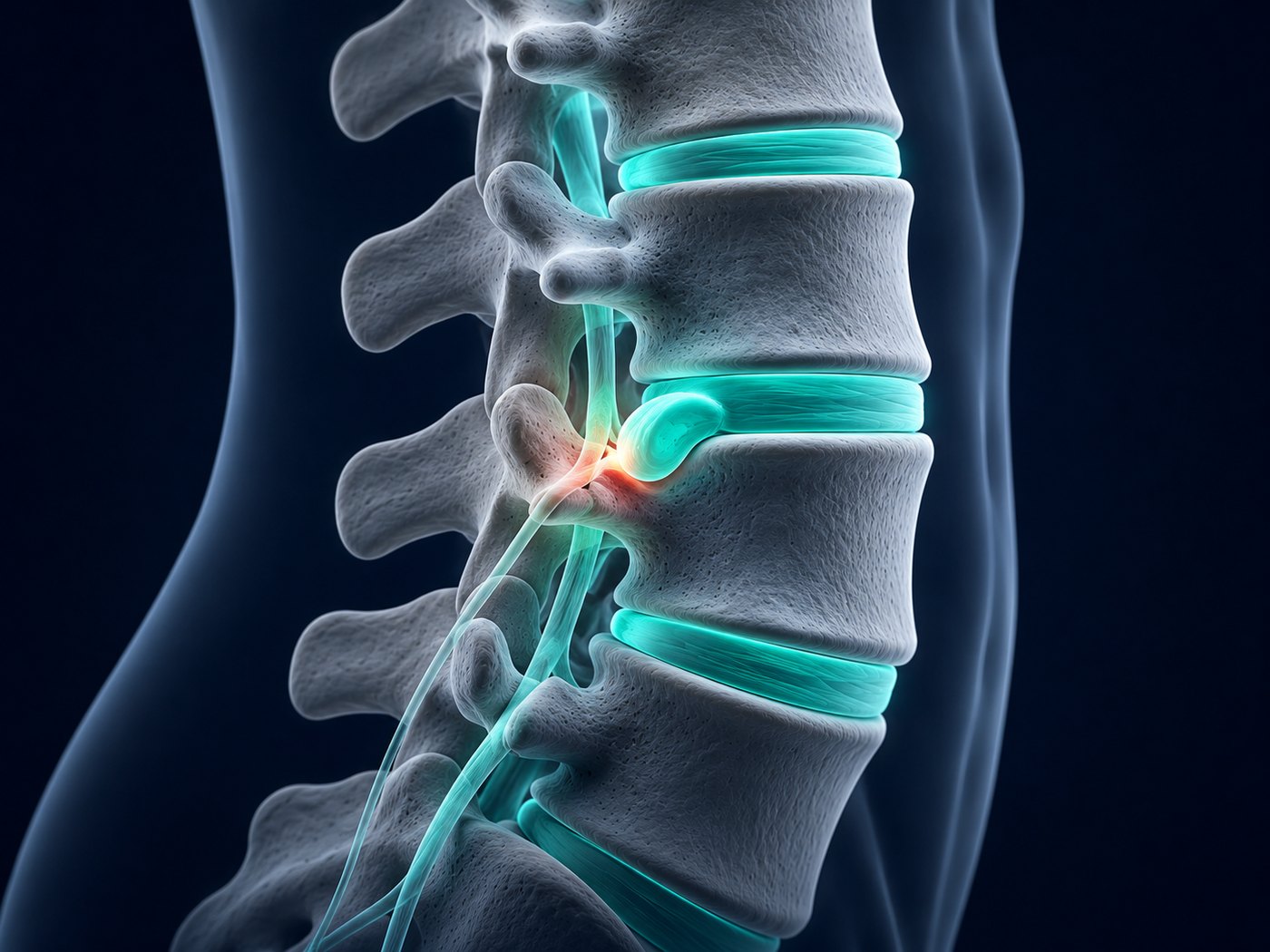
Why does my back hurt — and go down my leg?
Between each vertebra sits a disc that cushions and allows movement. When a disc wears or herniates, it can press on a nearby nerve — and that's when back pain travels to the buttock and leg (sciatica), often with tingling or weakness.
These are the causes I see most often in consultation:
- Herniated disc: low-back pain that shoots down the leg, worse when sitting or bending.
- Sciatica: pain, numbness or tingling along the path of the sciatic nerve.
- Disc wear and instability: chronic pain and stiffness, sometimes with a feeling of "giving way."
- Muscle strain and overuse: the most common cause, and often the one that responds best to conservative care.
Leg weakness, numbness that spreads, or loss of bladder/bowel control are red flags — seek care promptly. Most back pain, though, improves with the right, timely treatment.
Minimally invasive spine surgery
When surgery is needed, the goal is to decompress the nerve with the least possible disruption. Techniques like transforaminal endoscopy and discoplasty let me treat the damaged disc through a small port, protecting the healthy tissue around it.
Compared with traditional open surgery, this usually means:
- A small port instead of a large incision
- Less pain and blood loss
- A faster recovery and shorter hospital stay
"Spine surgery always leaves you worse off."
Well-indicated, minimally invasive surgery relieves nerve pressure and can give real relief. The key is choosing the right patient and the right technique.